new businesses waiting to launch, because accounting setup could not keep up.
There was no existing UI to copy. These processes had never been digital. Generative research meant learning the accounting itself: sitting beside accountants as they worked Excel, watched approval emails go missing, and performed month-end rituals by hand.
Observation sessions watching accountants perform manual settlements, mapping every interaction with spreadsheets, legacy systems, and the inbox archaeology needed to find one approval email.
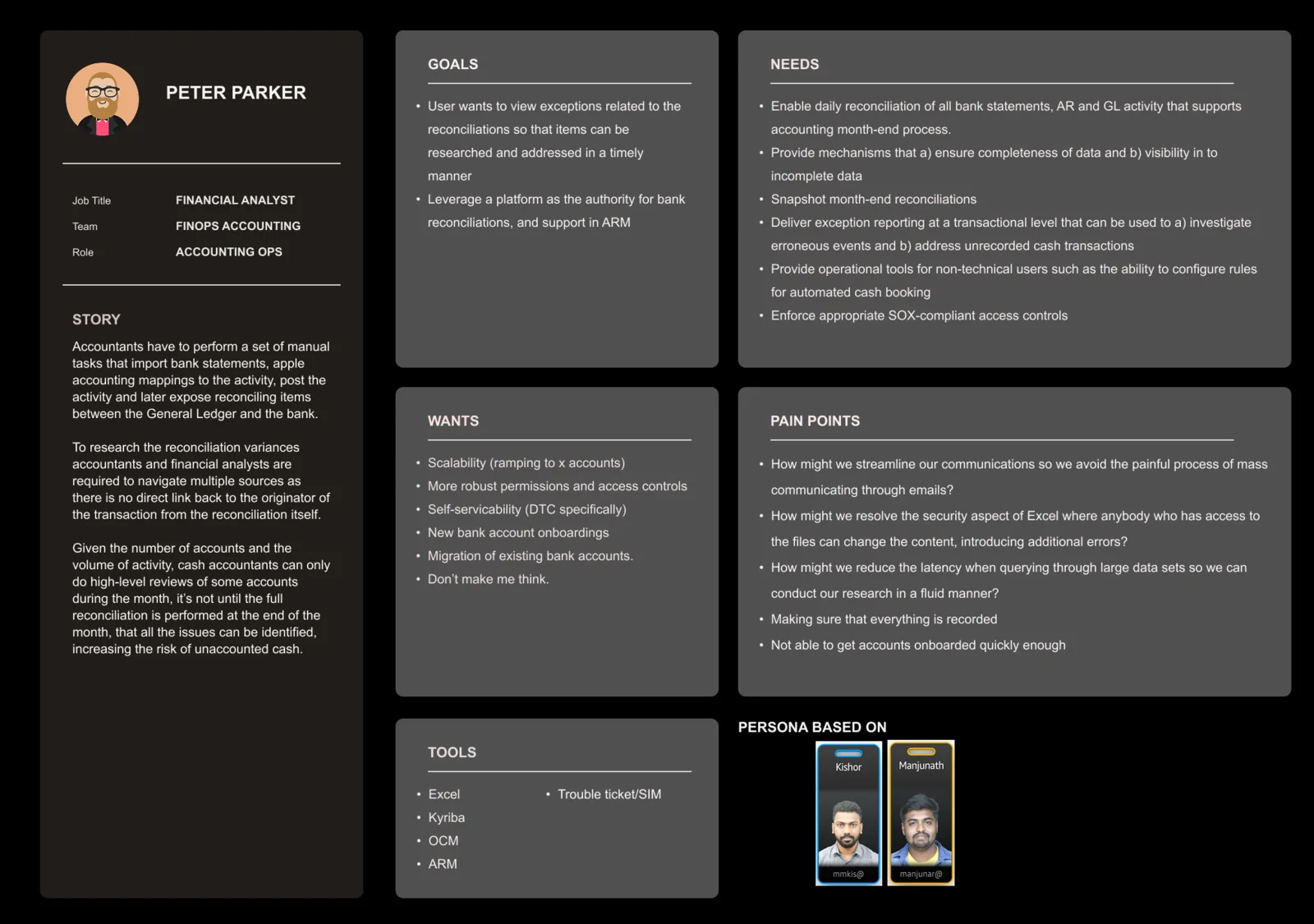
Requirements were scattered across the organisation, so the research produced nine anchored user types that every design decision traced back to: “Lisa Ann” (a Business TPM, launching a new business), “Marla” (Accounting FBI, connecting that launch to the accounting) and “Guannan” (a local accountant in one country).
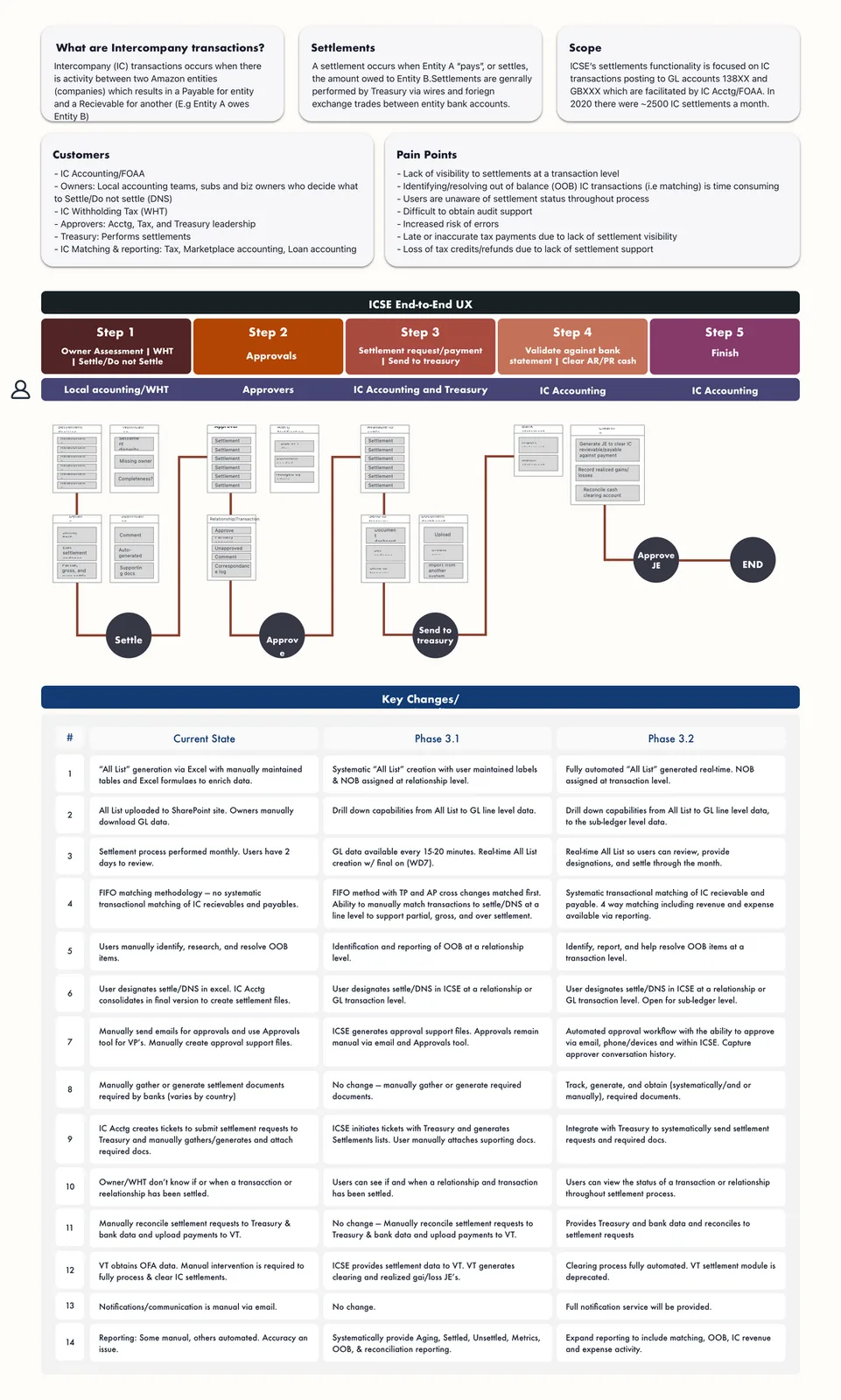
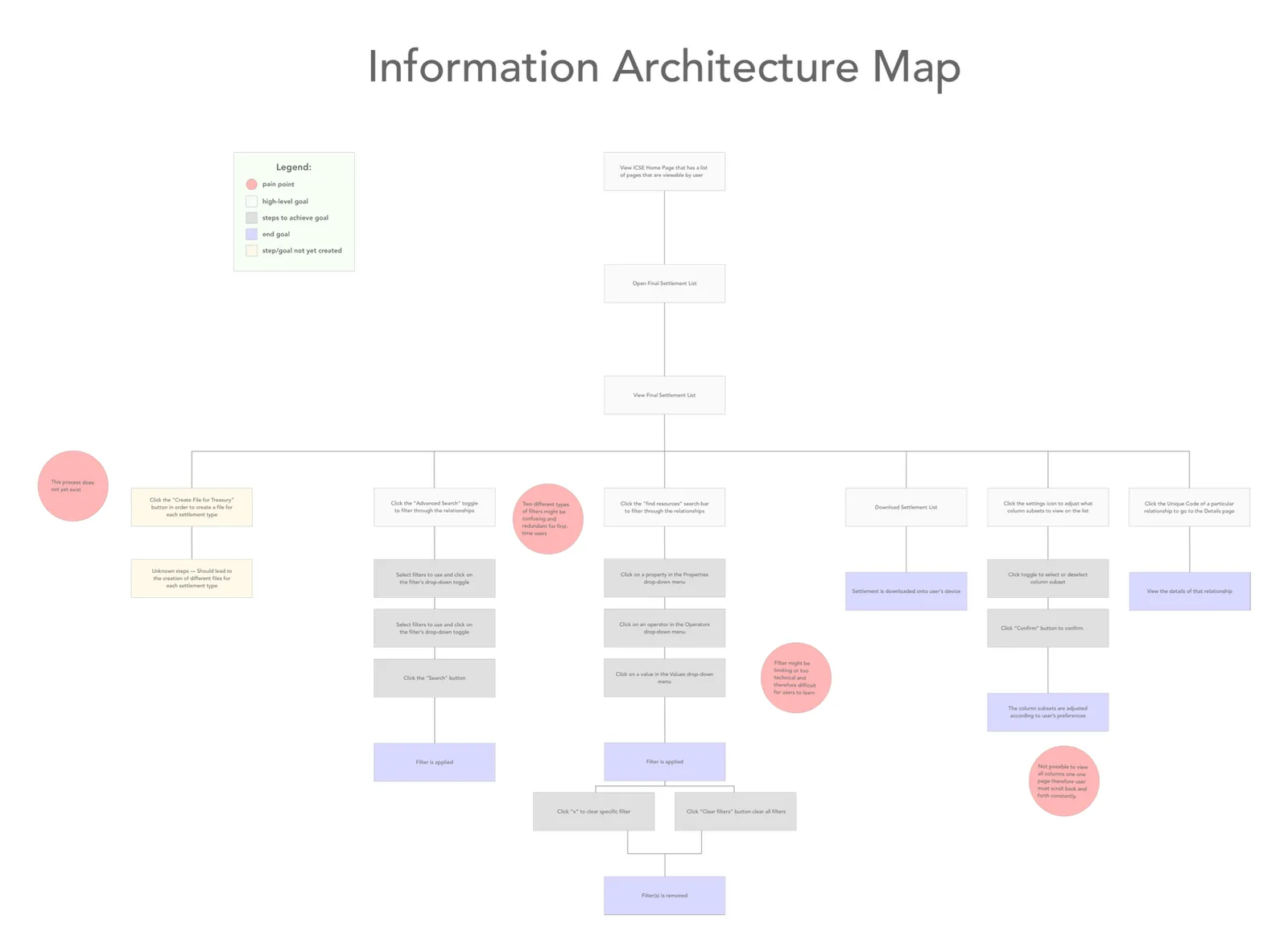
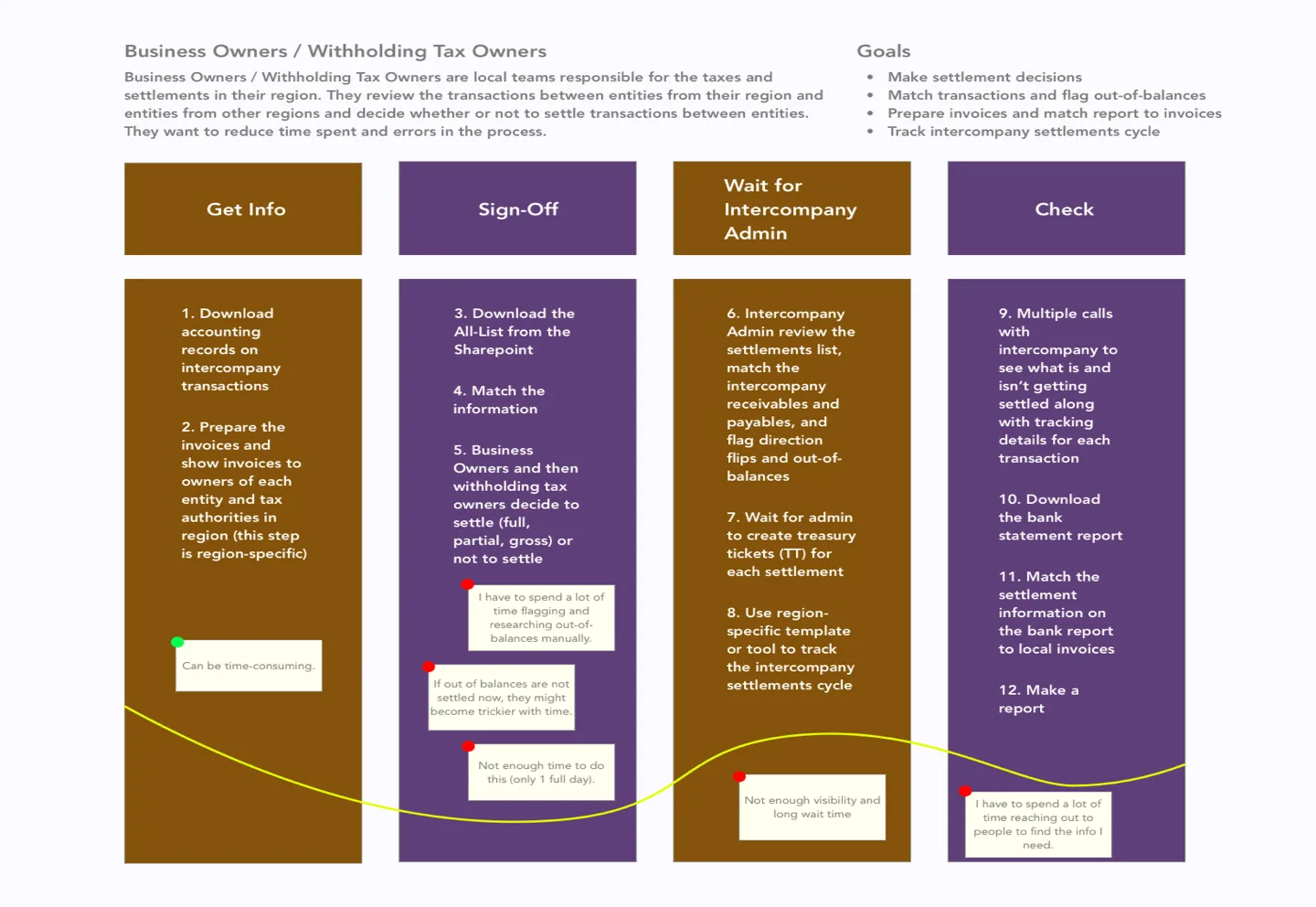
End-to-end UX flows, information architecture maps, logic flows, and customer journeys for every product. The analysis layer that turned observation into testable designs.
The most digital company on earth moved billions between its own companies in a spreadsheet.
If none of this means anything to you yet: Amazon is not one company. It is hundreds of separate legal ones that constantly buy and sell from each other. Every internal payment has to be recorded and agreed by both sides. That job was being done by hand.
Amazon US. Amazon Germany. AWS. Amazon Japan. Each its own legal business.
They trade constantly: server capacity, advertising, devices, shipping.
Every exchange is real money. Both sides have to record it, agree the amount, and pay it.
Roommates splitting bills. Now hundreds of roommates, and the bills are in the billions.
Every month, someone checked hundreds of relationships by hand, one line at a time.
The approval that released a payment lived in an inbox. The rule for recording it lived in one person’s memory.
All of it had to balance to the penny, by a deadline nobody could move.
When two Amazon companies trade, both sides record the amount separately. Matching is checking those two records agree. Settling is moving the money and closing the entry. Get either wrong and Amazon’s published numbers are wrong.
new businesses waiting to launch, because accounting setup could not keep up.
a year on outside software bought to paper over the gaps. It never closed them.
a fixed deadline to close the books, however long the manual checking took.
You describe the business in ordinary language — what, where, how the money arrives. The system derives the accounting behind it.
Every transaction between two Amazon companies on one screen: matched, unmatched, overdue — and one place to settle it.
Rules stopped living in documents and memory. Written once, checked as they are written, used everywhere.
At eleven at night, on deadline, is this still the easier choice?
We were never competing with another product. We were competing with a spreadsheet: free, familiar, already open. People fall back on what they know under pressure, and the last night of the month is nothing but pressure. That question settled almost every decision we made.
saved year over year, once the manual work and the outside software went away.
of people moved onto the platform in its first three months.
relationships that used to be handled by hand, now handled by the system.
The middle number is the one that counts. The spreadsheet stayed available the whole time. Nobody was forced off it. People stopped reaching for it.
That’s the story. There’s more underneath it.
What I was hired to do, how I did it, and what changed as a result.
It is hundreds of separate legal ones — Amazon US, Amazon Germany, AWS, Prime Video — and they buy and sell from each other constantly: server capacity, advertising, shipping, devices. 650+ such relationships, every one of them real money.
Both companies record the same transaction separately, and the two records have to match exactly, then be paid, then be filed — against a monthly deadline that never moves. That work is called closing the books.
None of it had ever been software. No competitor to study, no prior art, no existing screen to improve. What I was replacing was a spreadsheet, an inbox, and a policy document on somebody’s desktop.
Describe the business in plain terms; it works out the accounting.
Every payment between two Amazon companies, on one screen.
The accounting rules, written once and checked as they are written.
None of this work had ever been software. There was no screen to improve, and no competitor to study.
No competitor to benchmark, no prior art, no existing screen. So the research was pure observation: sitting beside accountants through real settlements and real month-end deadlines, mapping every manual step, every point where human judgement entered, and every point where information quietly got lost.
Nine documented user types, defined by what each person is responsible for, the words they use, what they are allowed to see, and what happens if they get it wrong. Not age and job title. Three product teams stopped arguing from anecdote and started arguing from the same map, and that model outlasted every individual design decision on the programme.
Three laws, set before a single screen was drawn: translate what the business says into what accounting needs, expose where a settlement actually stands so anyone can check it, prevent mistakes while a rule is being written rather than after it is live. Every screen downstream is a consequence of those three.
Not satisfaction scores. Whether people stayed in the product during month-end, when the free and familiar spreadsheet was one click away. Agreeing that measure up front is what made the result arguable afterwards.
Eight real pieces of the work, labelled by the kind of thinking each one needed. Click any of them to view full size.
Recordings come from the working prototypes, with sample data. Names and figures in them are fictional.
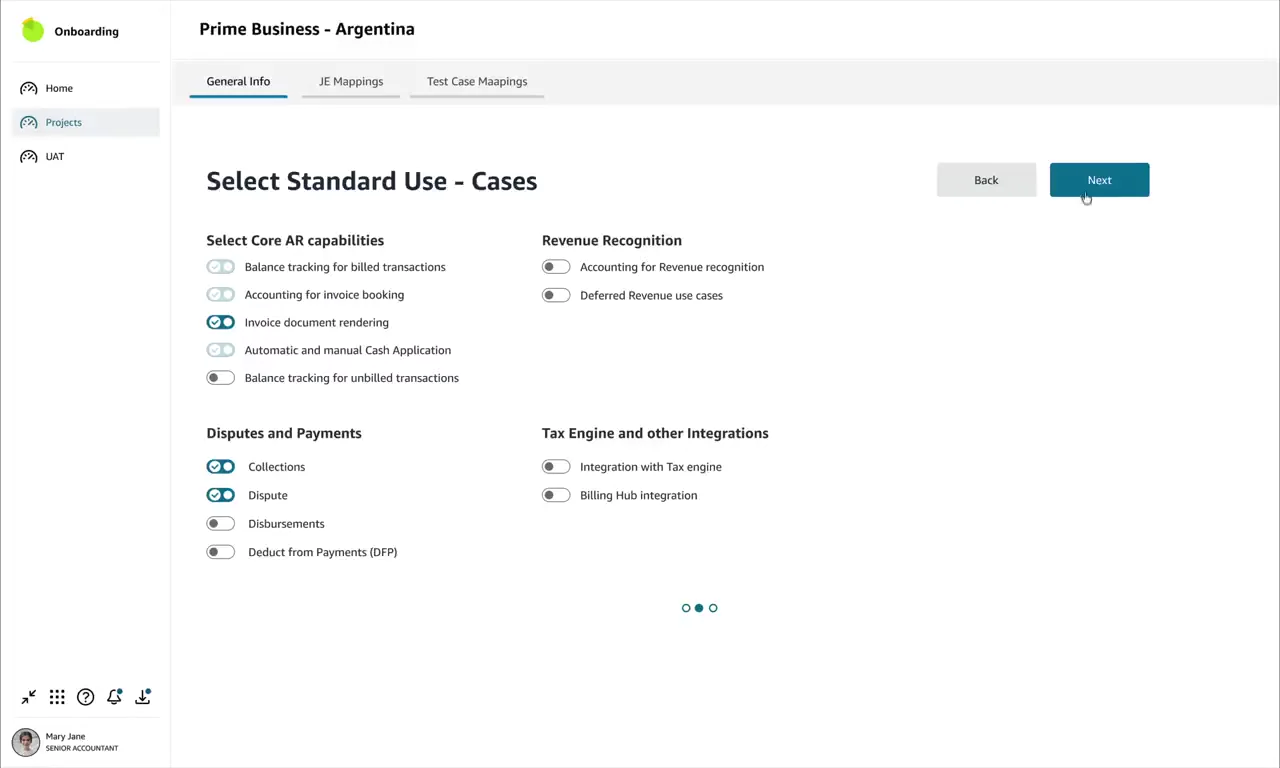
A step-by-step flow that lets the person launching a business (a Business TPM) describe it in their own language, while the platform works out the accounting entries Finance needs from it.
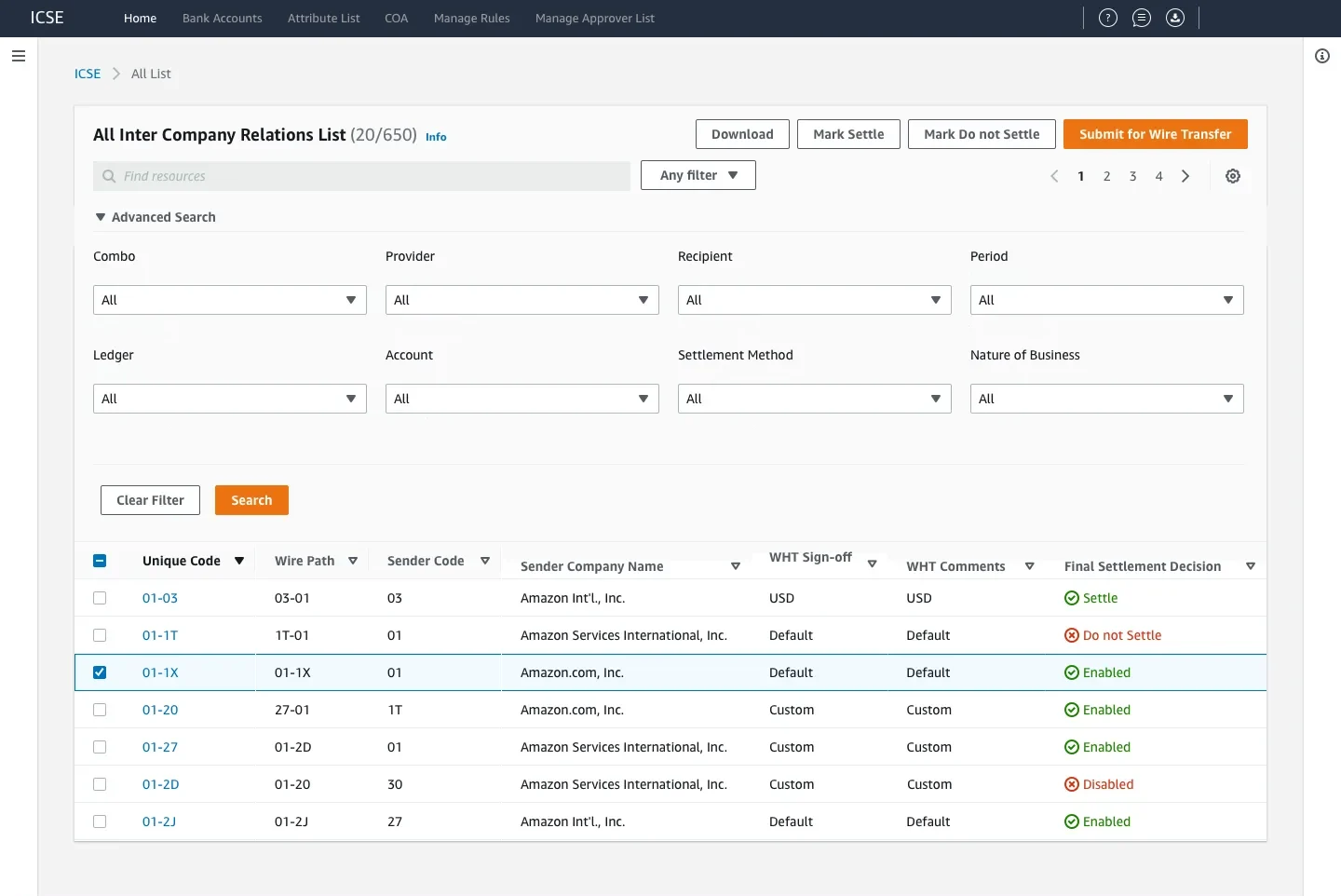
UNBLOCKED 100+ LAUNCHESHow long each amount has been outstanding, which records agree and which do not, the largest transfers first, and every way of paying — part of it, all of it, or more than the recorded amount — in one flow.
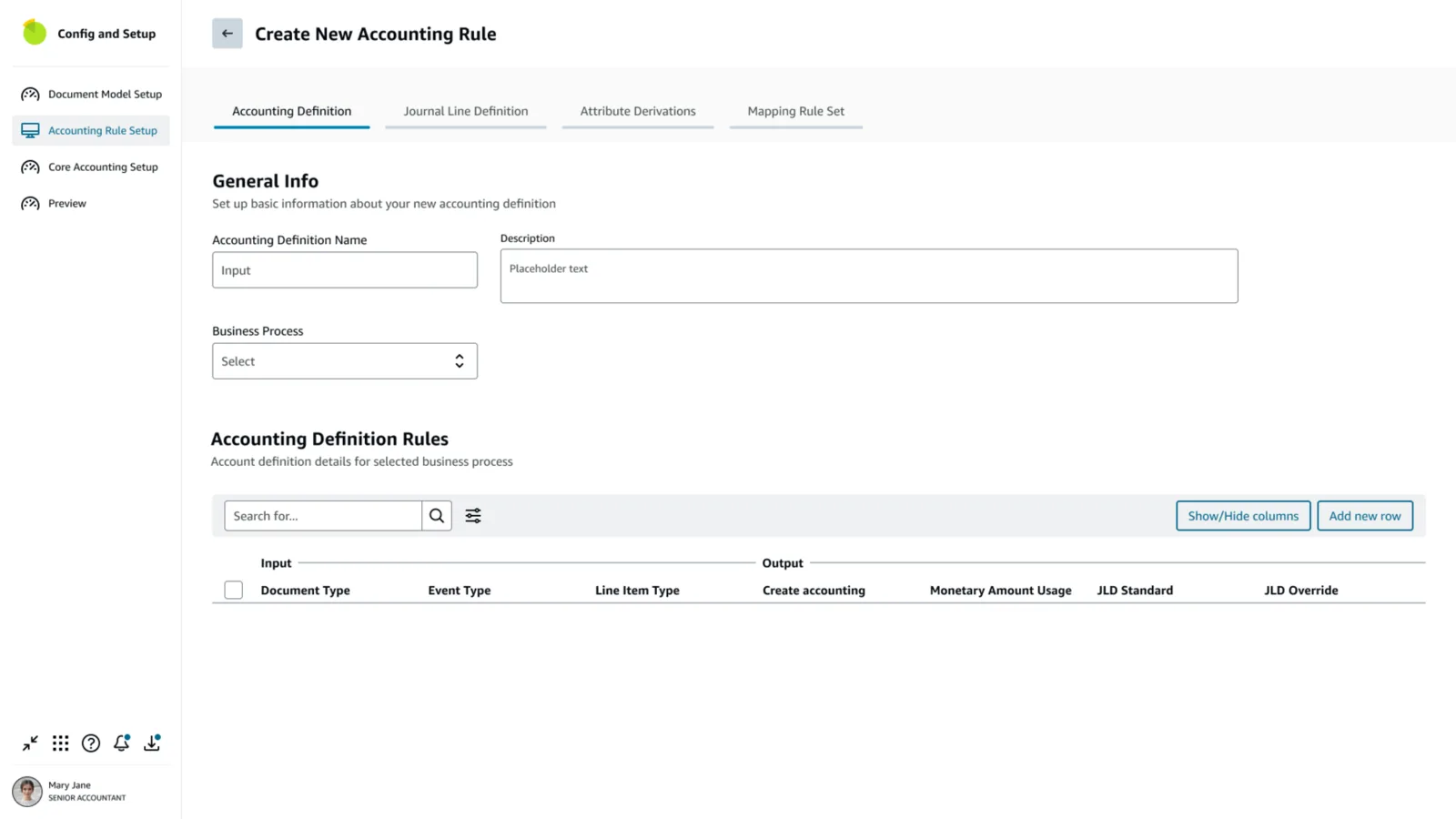
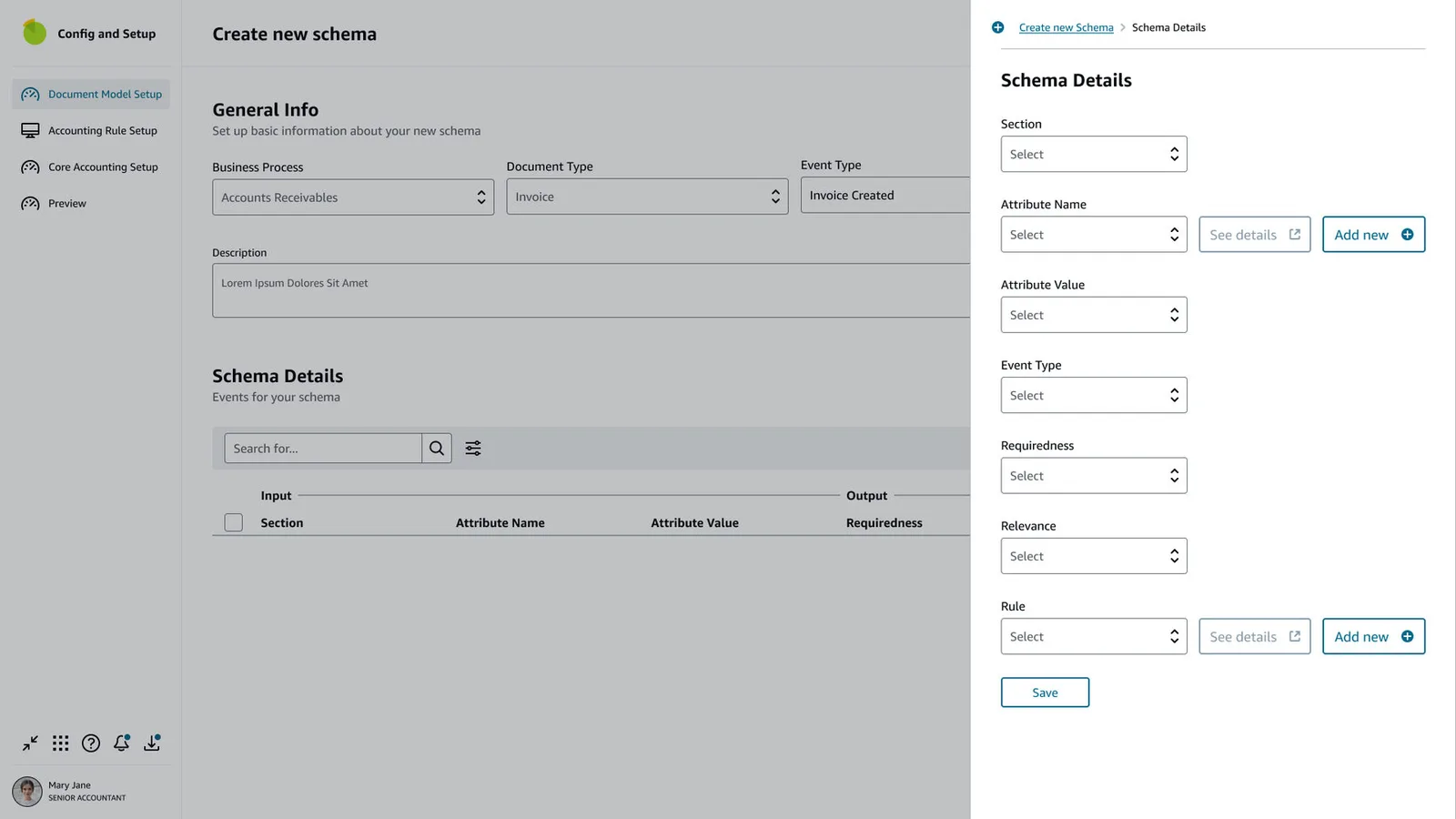
FOR ACCOUNTANTS · 650+ RELATIONSHIPS OFF SPREADSHEETSBuilding an accounting rule step by step on top of a shared data structure, so the rule is something the software can read and reuse instead of a paragraph somebody has to interpret.
FOR THE PEOPLE WHO OWN POLICY · REUSED EVERYWHEREWhere these numbers come from. Adoption and the year-over-year saving were tracked by the Finance operations team over the four quarters following launch, against the cost of the manual process plus the third-party software it replaced. Excel stayed available the whole time, so adoption here means chosen, not mandated.
The adoption number is the one I would defend first. Nobody was forced off spreadsheets — they stayed available, free and familiar for the entire rollout. So staying in the product on the last night of the month was a real choice, and people kept making it.
No precedent, no competitor, no existing screen. The research is what produced the problem definition the programme was then funded against.
Three products, three audiences, one shared way of working and one shared data structure. The joins between them were the actual design work.
Accountants, product managers and engineering leads on a single shared model of the work, across three teams that had been solving it separately.
Success defined in dollars and behaviour before the work started, and measured against that definition afterwards.
I stayed in the dense payment screens and the rule-writing flows — the fiddly, unglamorous surfaces most senior designers stop looking at once a programme gets large.
Want the reasoning, the research artifacts and the screens?
Inside the world's most digital company, money between its own businesses still moved on paper logic: payments matched in Excel, the rules for recording them sitting in somebody's inbox. Three products changed that.
650+ trading relationships between Amazon's own companies — plus every rule, payment and new business launch — depended on numbers somebody was keeping by hand.
I led the research and set how the three products — Fulcrum, ICSE and Abacus — divided the work and handed off to each other, aligning Finance, product and engineering around one system.
What people did in the first three months proved they trusted the platform under a real deadline, with the spreadsheet still one click away.
Amazon is not one company. It is hundreds of separate legal ones, and they trade with each other constantly.
Amazon US, Amazon Germany, AWS, Prime Video — each its own legal company, buying server capacity, advertising, shipping and devices from the others. 650+ such relationships.
Both sides record every exchange, the two records must agree exactly, then it must be paid — by a monthly deadline that never moves. Those totals become the numbers Amazon publishes.
None of it had ever been software. No competitor to study, no prior art, no screen to improve. I was replacing a spreadsheet, an inbox, and a policy document on somebody’s desktop.
Describe the business in plain terms; it works out the accounting behind it.
Every payment between two Amazon companies, on one screen, for the first time.
The accounting rules, written once, checked as they are written, and reused.
Accounting has the densest vocabulary of any subject on this site. Any term with a dotted underline will explain itself if you hover or tap it, and the glossary below holds all of them in one place.
What people knew stayed in their heads, the rules lived in inboxes, and $15M+ a year went on outside software that never closed the gap — while every payment matched by hand was a chance to put a published number in error.
New Amazon businesses waiting in line to launch, because nobody could set up their accounting fast enough.
Spent on third-party software to paper over the gaps.
Engineer-weeks lost to teams solving the same problem twice.
Trading relationships between Amazon's own companies, managed by hand.
These processes had never been software, so there was nothing to test and nothing to copy. I led research done by observation inside real settlements, mapped every manual step, and turned what I saw into nine documented kinds of user on one shared template.
Each one captured what that person is responsible for, the words they use, what they are allowed to see and what happens if they get it wrong — not their age or job title. Those differences became the shape of the platform: the people launching businesses describe what they want, accountants inspect what actually happened, and policy owners set the rules everyone else runs on.
Observation exposed the same tension everywhere: the accounting has to be exact to the penny, but most people entering the process think and speak in ordinary business terms. I turned that tension into three product laws: translate what the business says into what accounting needs, make it possible to see where anything stands, and stop mistakes before they are live.
Fulcrum begins with the business: what is launching, how the money arrives, and who owns the decision. The accounting entries are worked out from those answers instead of demanded up front.
ICSE replaced guessing-from-a-spreadsheet with the actual numbers: what is owed, which records agree and which do not, what is unusual, and a path down to the individual transaction. An accountant could finally see where a payment stood, and why.
JEM and Abacus check the work while somebody is still writing it. The safest error in a live financial system is the one the software will not let you submit.
Recordings come from the working prototypes, with sample data. Names and figures in them are fictional.
Money moves through finance in three steps. Something a business person can describe becomes a payment with a state you can inspect, which becomes a line in the official book of record. The screen changes at each handoff, because the person, the vocabulary and the consequences of a mistake change with it.
Which country, how the money comes in, who owns it, when it starts — in the language the person launching it already uses.
Accountants see what is owed, which records agree, what looks wrong, and the exact transaction behind every number.
Policy owners write the rule once, and the check built into it makes the two sides of the entry come out the same way every time.
100+ new businesses sat waiting to launch because the business side and the accounting side literally did not speak the same language. The guided flow I designed creates one shared workspace: plain business facts go in, the accounting entries Finance needs come out, already checked.
I shaped Fulcrum around one separation: what the person knows versus what accounting has to produce. The flow translates between them, keeps a real accountant close by for anything unusual, and catches mistakes before they are live.
A “tell us about the business” flow turns familiar facts into the accounting behind them.
Drag business fields onto accounting fields; anything that does not add up is flagged before it goes live.
Suggestions sit on the thing being discussed, instead of in a twelve-reply email chain.
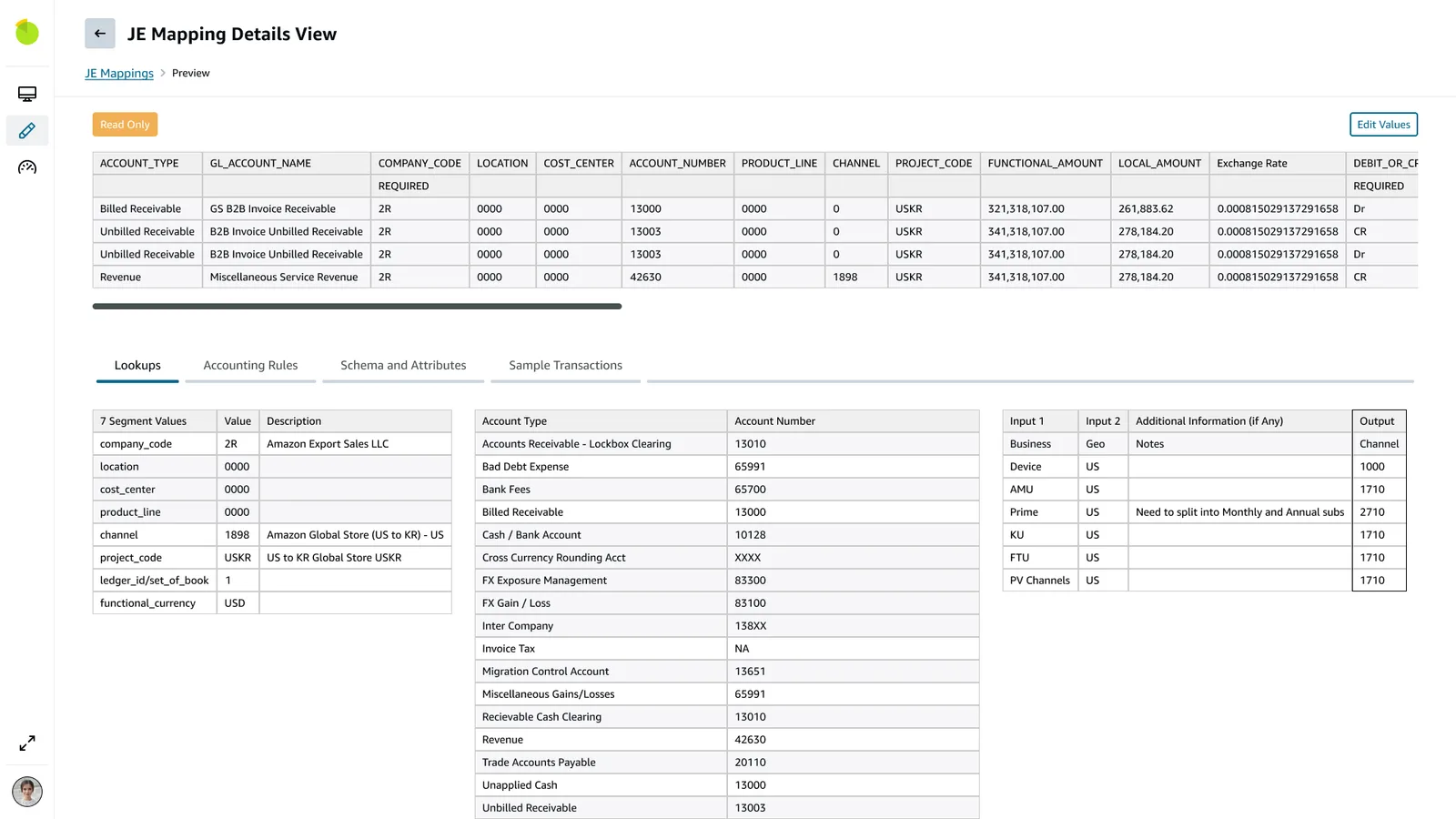
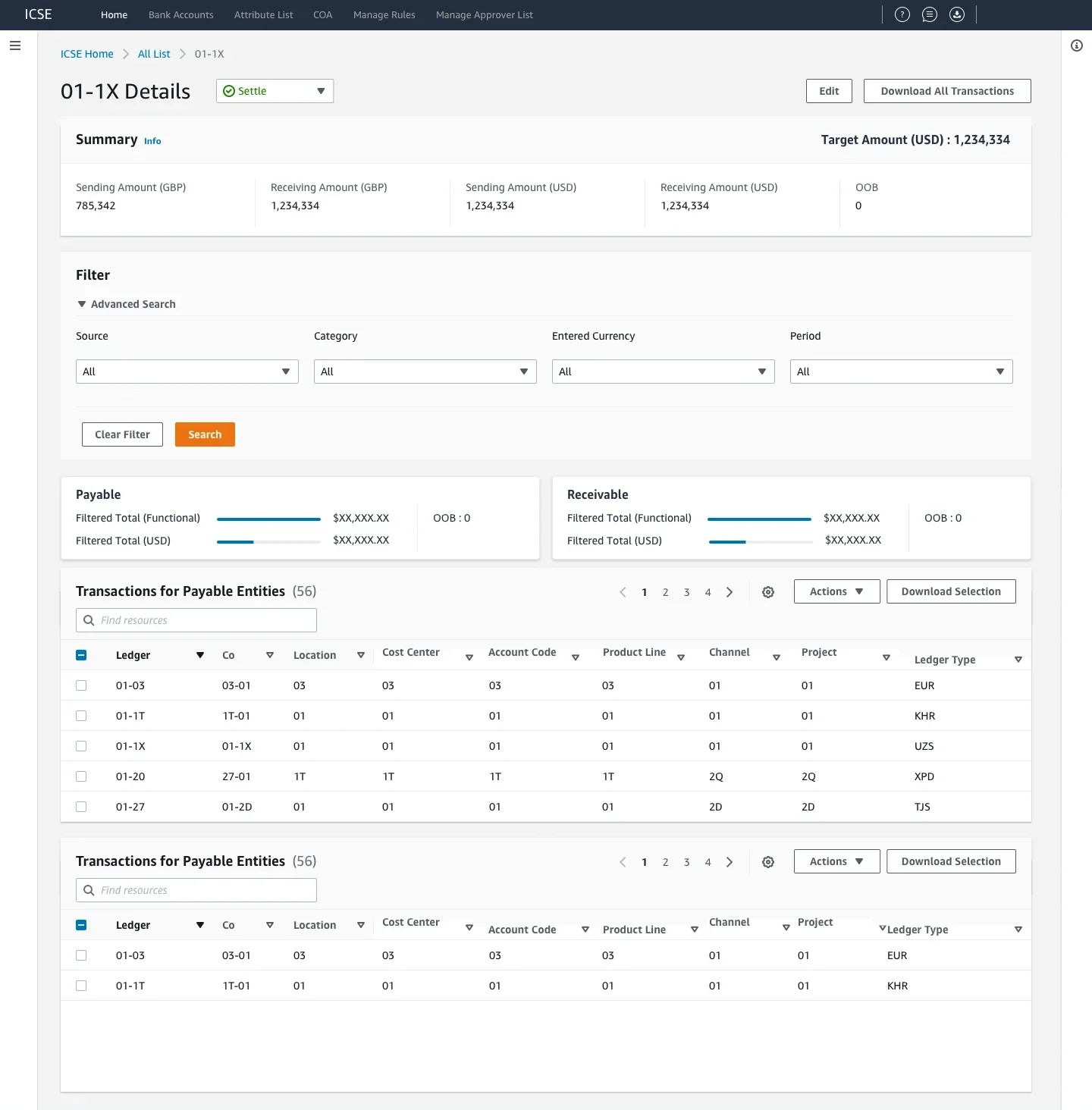
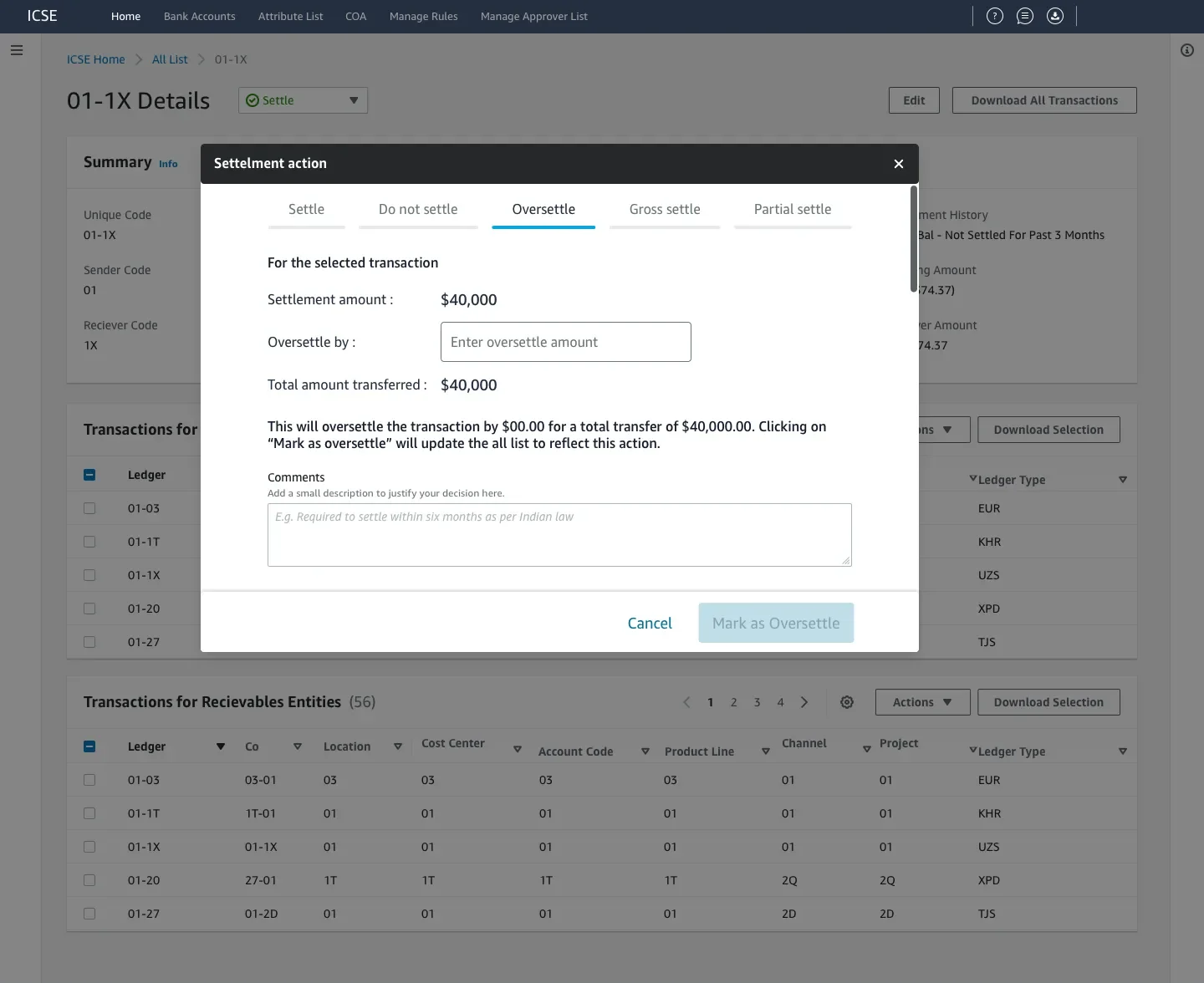
Paying money between two Amazon legal companies was pure Excel. No screen for it existed anywhere. ICSE let accountants see individual transactions for the first time: how long each amount has been outstanding, which records agree and which do not, filters like “anything over $100k,” and every way of paying — part of it, all of it, or more than the recorded amount — in one flow.
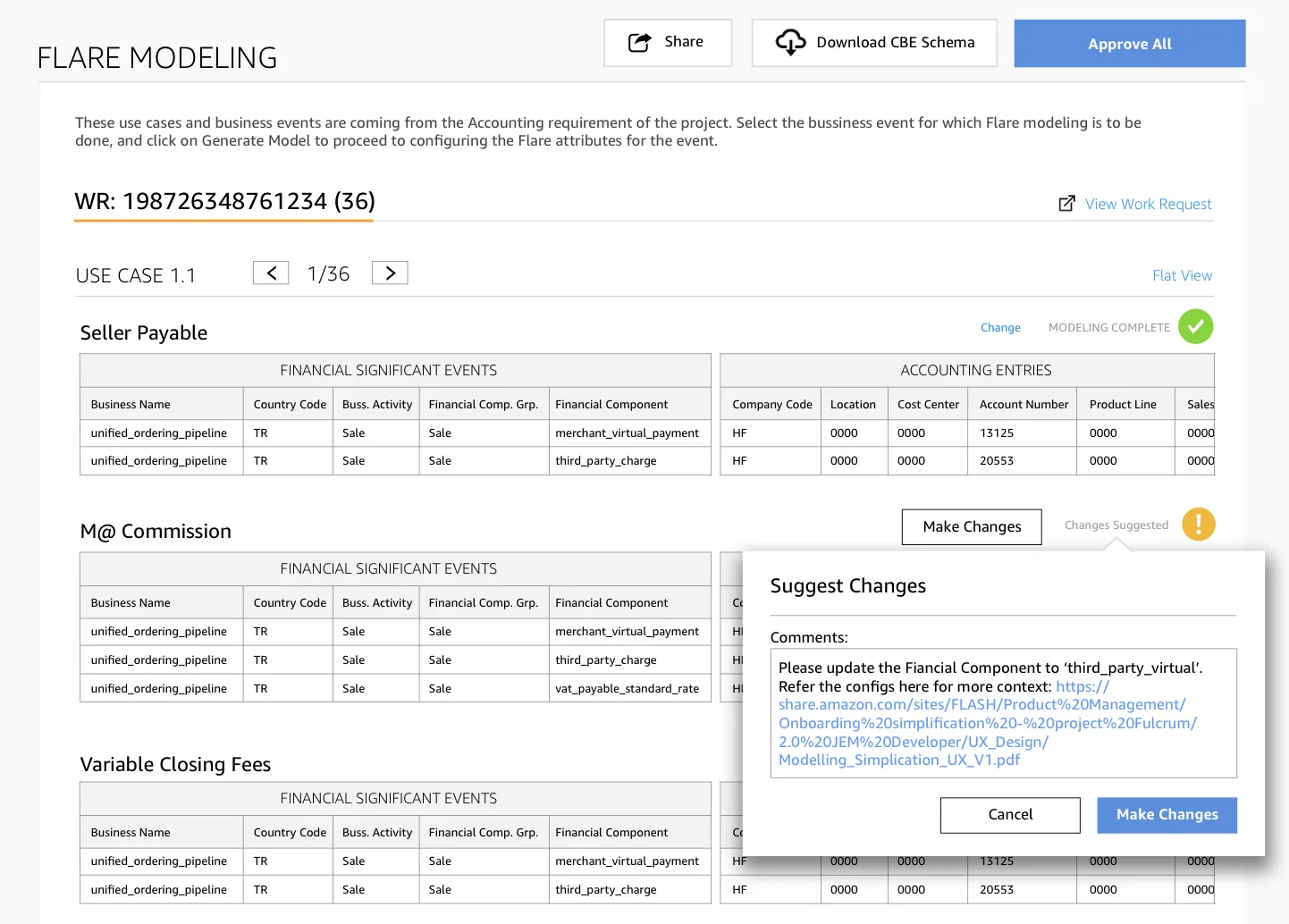
The rules for how to record things were written down inconsistently and enforced mostly by memory. Abacus made them structured, guided and kept in one place: a single library built on a shared data structure, so a rule is something the software can read and reuse rather than a paragraph somebody has to interpret.
The real test was not whether people could use the platform in a demo. It was whether they would stay in it on the last night of the month, with a fixed deadline and a familiar spreadsheet one click away. We tested real payments, real accounting entries and real exceptions across all nine kinds of user, making every state easy to trace and explain out loud.
Accountants could trace a total down to the individual transaction behind it, and people who were not engineers could write rules without having to memorise the underlying data structure.
More than 90% chose the platform in its first three months. That mattered because its real competitor was never another product — it was the familiar escape hatch back to Excel.
Setting up a business, tracking a payment and writing a rule now ran on one shared model. Each new relationship reused the same language, the same controls and the same source of truth.
Synthesized from documented program outcomes. These are readouts rather than direct quotes.
Finance gained more than a tidier screen. What a business intends, where its money actually stands, and the rules that govern both became controllable in one place.
The strongest signal was what people chose. Teams stayed in the product even when deadline pressure made Excel the easiest escape.
saved every year, ongoing
There are shorter versions of this same project.
A real shipped ICSE screen at full size: every settlement relationship between two Amazon companies, and the state of each. Click to zoom. Four of the decisions that produced it are on the right.
Click to zoom
Summary, then filter, then the two sides, then the transactions underneath. That is the order an accountant actually works in — state first, evidence last — rather than the order the database would suggest.
Reconciliation is a comparison, so the two sides are never a tab apart. Both carry a filled bar against the same scale, which turns “do these agree” into something answerable at a glance instead of by arithmetic.
“Settle” sits in the header with an icon and a label. These screens get printed and defended in audit, so a state that exists only as a colour does not survive a photocopier or a colour-blind reviewer.
“Transactions for Payable Entities (56)”, with pagination beside it. At this volume the most expensive mistake is believing you have seen everything, so the total is never more than a glance away.